

What is CashBlack?
Cashback for shopping with Black-owned businesses. Real money back, real businesses growing, real wealth staying in the community.
How CashBlack started
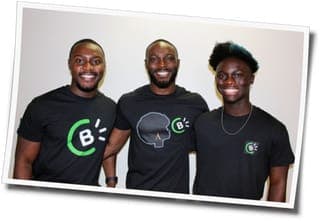
CashBlack was founded in 2020 by Matthew, Jonathan and Nicholas Addai, three brothers from St Albans. That summer's global anti-racism movement made something plain to everyone: the socioeconomic issues facing Black people and the lack of support for Black-owned businesses are directly connected.
The brothers' answer was to make supporting those businesses pay, literally. Reward people for shopping Black-owned and have the businesses reinvest in their customers.
"How about a cashback website?" they thought. "A cashback website, for Black-owned businesses. Why don't we call it CASHBLACK?"
What started as a play on words is now the platform: sign up, shop with Black-owned brands and earn cashback from the affiliate commissions we receive. Withdraw it or donate it. Your money, your call.
Why Black-owned businesses?
Many of the issues that hit the Black community hardest trace back to socioeconomic disparity, and that disparity feeds on the underfunding of Black enterprise. Economic power changes what conversations about equality alone cannot. Every purchase through CashBlack moves money to a Black-owned business and puts cash back in a shopper's pocket. That is the whole model.
The numbers behind the mission
Statistics and citations reproduced from our research. Sources named per figure.

Underrepresentation
Visible, successful Black entrepreneurs shift perceptions and open doors.
- White males on boards
62%
White males make up 62% of boards and occupy 83.8% of executive directorship while male BAMEs 6% and female BAMEs 3.8%. (The DiversityQ FTSE 100 Board Diversity Report, 2020)
- Actual Black business founders
3%
Over a 16-year period, nearly 30% of the UK Black population had thought about starting a business, nearly twice the level of non-ethnic groups. Yet only 3% followed through. (Federation Small Businesses, 2020)
Crime
Thriving Black businesses mean legitimate pathways for talent that systemic barriers push aside, and stable work builds safer communities.
- More likely to be arrested
3x
Black people are over 3 times as likely to be arrested as white people. In 2019, there were 32 arrests per 1,000 Black people vs. 10 per 1,000 White people. (ONS, 2020)
- Of prison population
12%
While Black people account for just 3% of the UK population, they make up 12% of people in prison. (The Lammy Review, 2018)
Racial disharmony
When Black businesses succeed, stereotypes lose their grip in schools, workplaces and media.
- Witnessed racism at school
95%
95% of young Black people have witnessed racist language at school. (YMCA, 2020)
- Faced workplace harassment
70%
70% of ethnic minority workers reported racial harassment at work in the last five years. (Trade Union Congress, 2019)

The racial wealth gap
Cashback is a small lever on a large gap. It works by compounding, purchase after purchase.
- Lost annually in wages
£3.2B
Black, Asian and ethnic minority employees lose £3.2bn yearly in wages compared to white colleagues doing the same work. (The Resolution Foundation, 2018)
- Median wealth: Black African households
£24K
The median Black African household was worth £24,000 vs. £282,000 for a white British household. (ONS, 2020)

Unemployment
Black-owned businesses create jobs shaped for their communities instead of waiting on systems that exclude them.
- Black unemployment rate
8%
In the UK, 8% of Black people are unemployed, the highest rate of all ethnic groups, twice that of white people at 4%. (ONS, 2021)
- More likely to be unemployed (graduates)
2.5x
Black, Asian and ethnic minority graduates are 2.5x more likely to be unemployed than white peers. (Trade Union Congress, 2016)
The economy
Black-owned businesses pay more to borrow and get turned away more often. Revenue is the counterweight, and the whole economy gains.
- More likely to be denied loans
14.4%
Black-owned businesses were 14.4% more likely to be rejected for long-term loans. (Warwick Business School, 2012)
- Higher interest rates on overdrafts
2.12%
Even with an overdraft, interest rates were 2.12 percentage points higher than for White-owned businesses. (Warwick Business School, 2012)
Our mission
People want cash. The surge of interest in investing, trading and financial security since the pandemic says so. People want to back the Black community. The global movements of 2020 and everything since say so.
CashBlack is both at once: financial reward and social responsibility in the same purchase. More than a name, it is the mechanism. Real change, one purchase at a time.